Sir Gilbert Thomas Walker was a physicist, statistician, and meteorologist — one of those rare minds who move effortlessly between disciplines and reshape each one they touch.
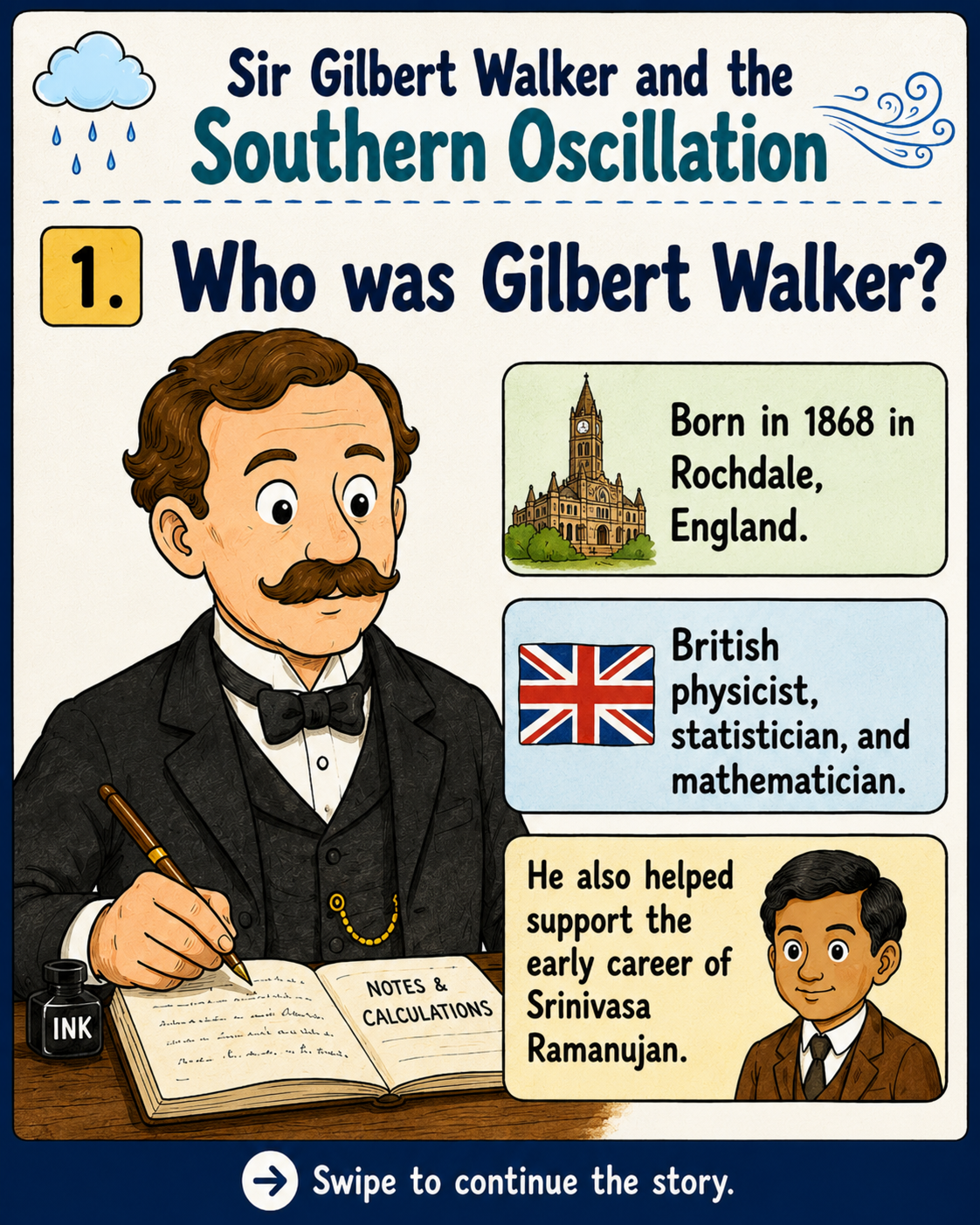
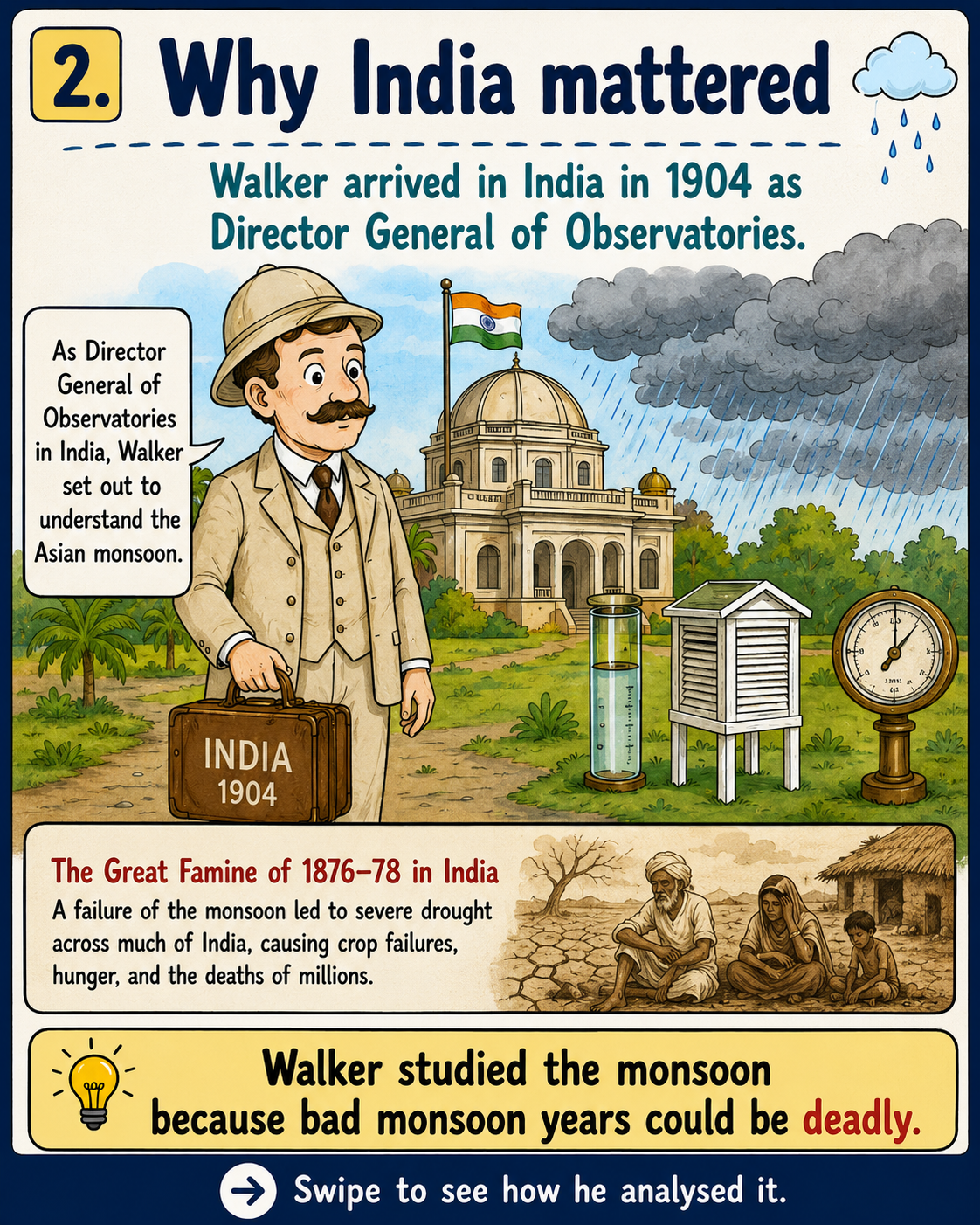
Born in Rochdale, he was named Senior Wrangler at Cambridge in 1889 — the top mathematics student of his year. He taught at Trinity College until 1903, when he left for India to become director general of observatories. He had no prior experience in weather forecasting — he was hired purely for his mathematical brilliance.
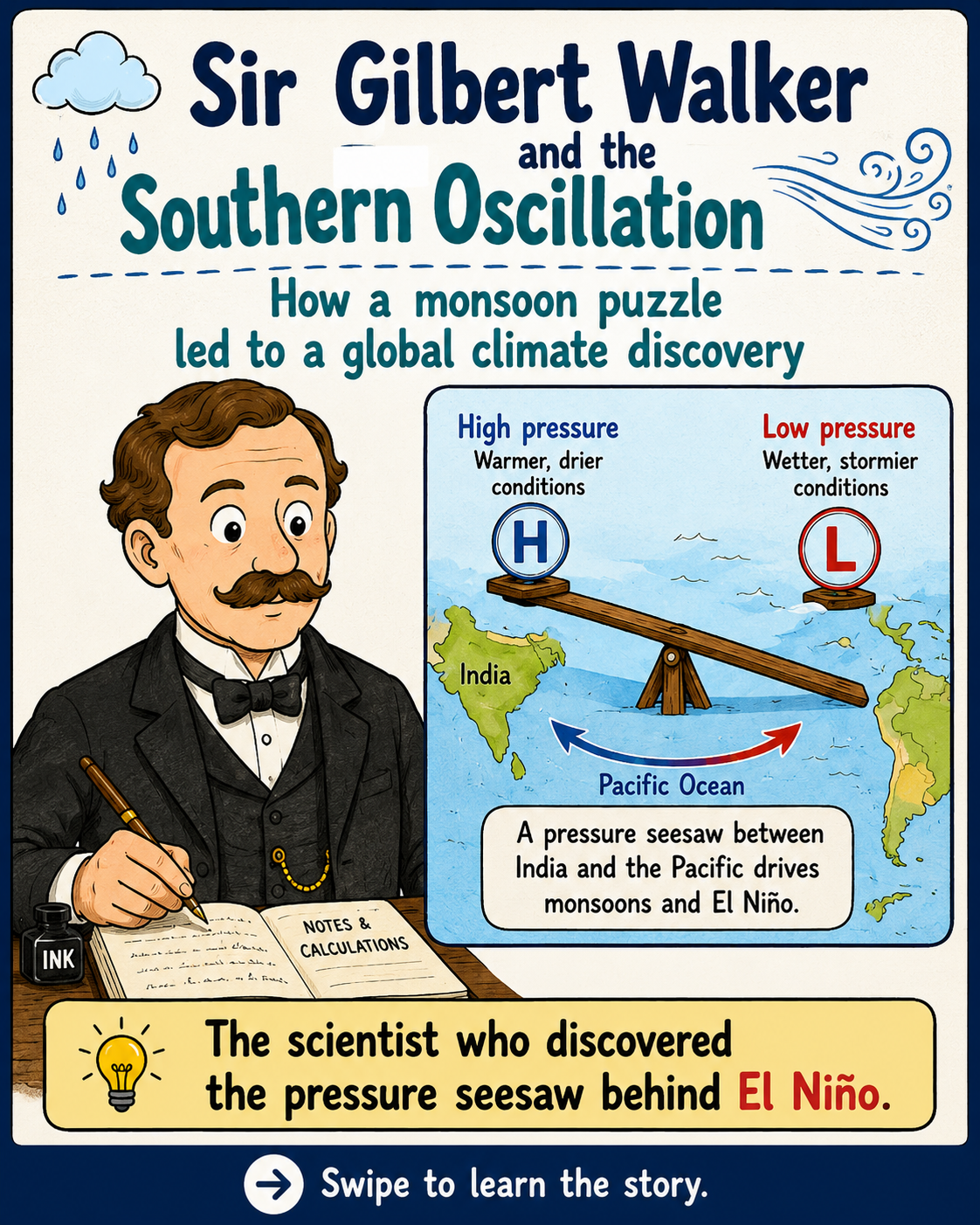
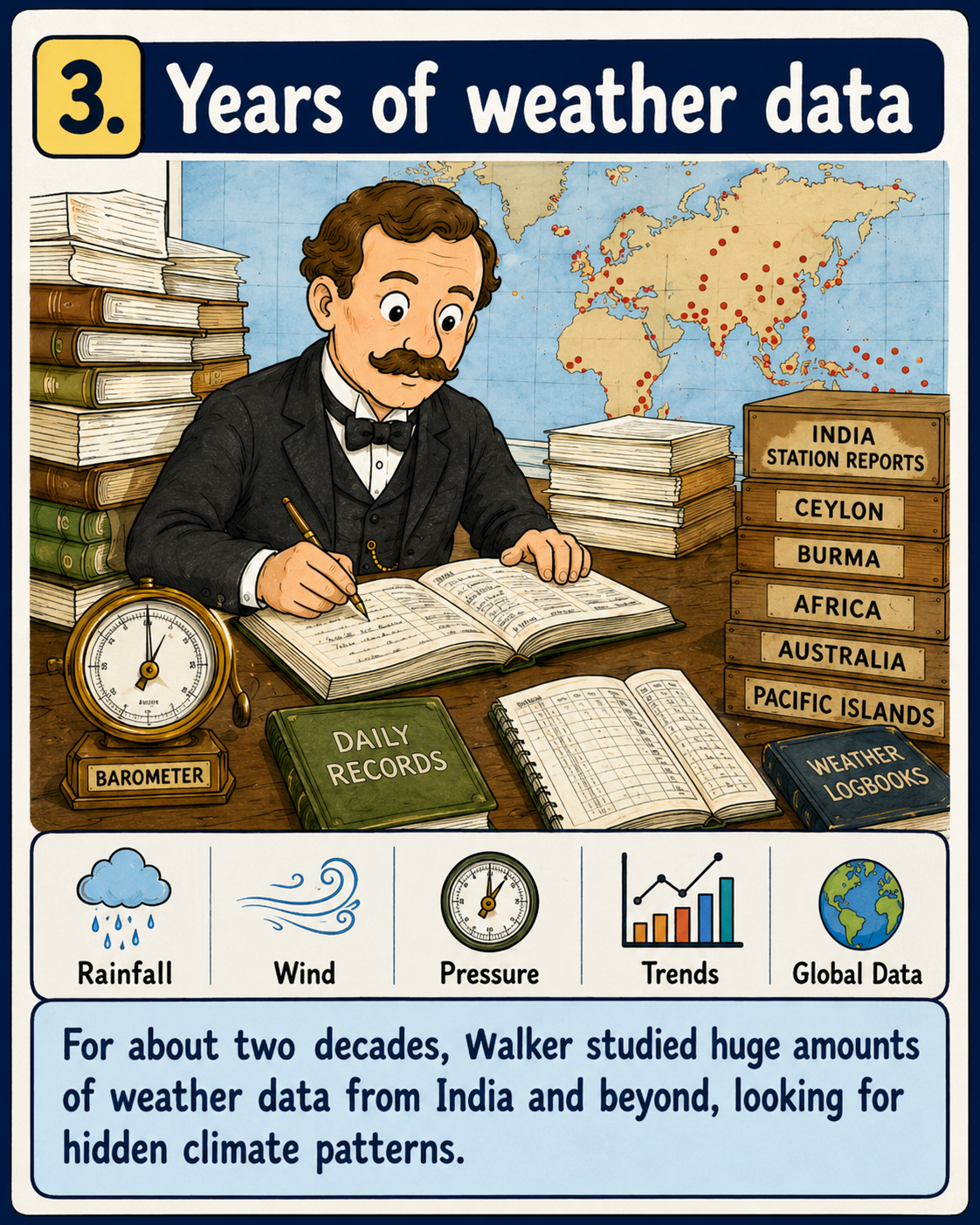
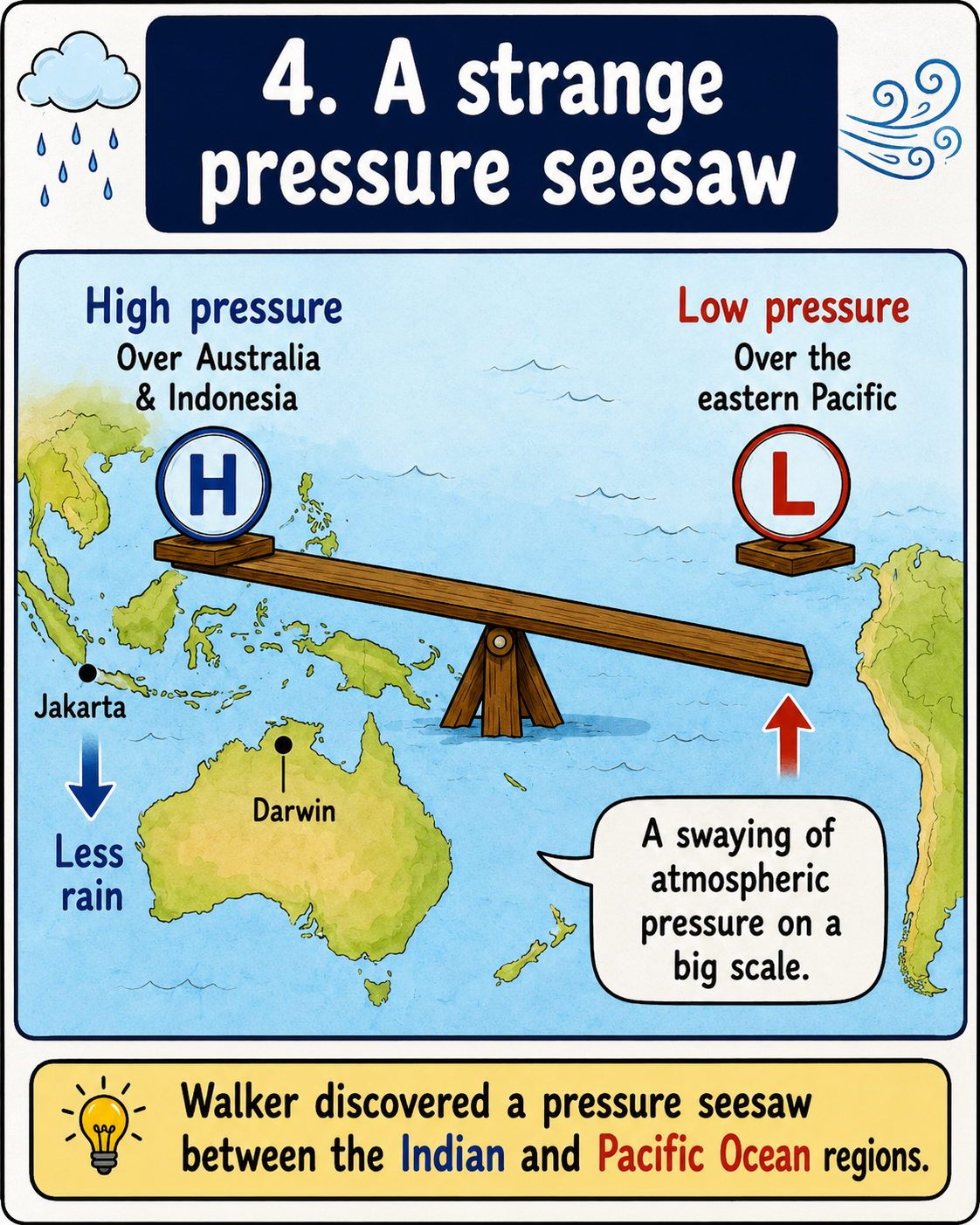
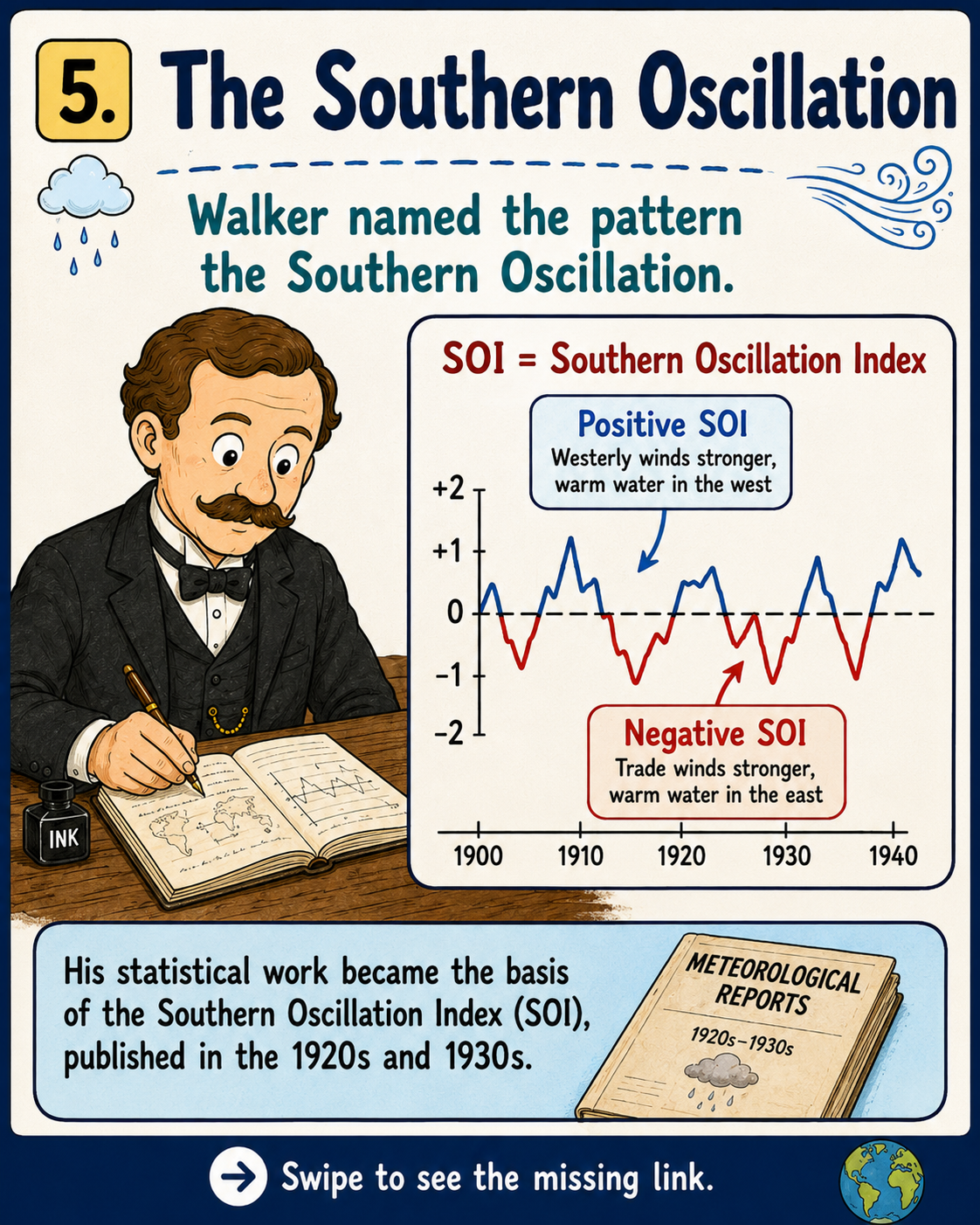
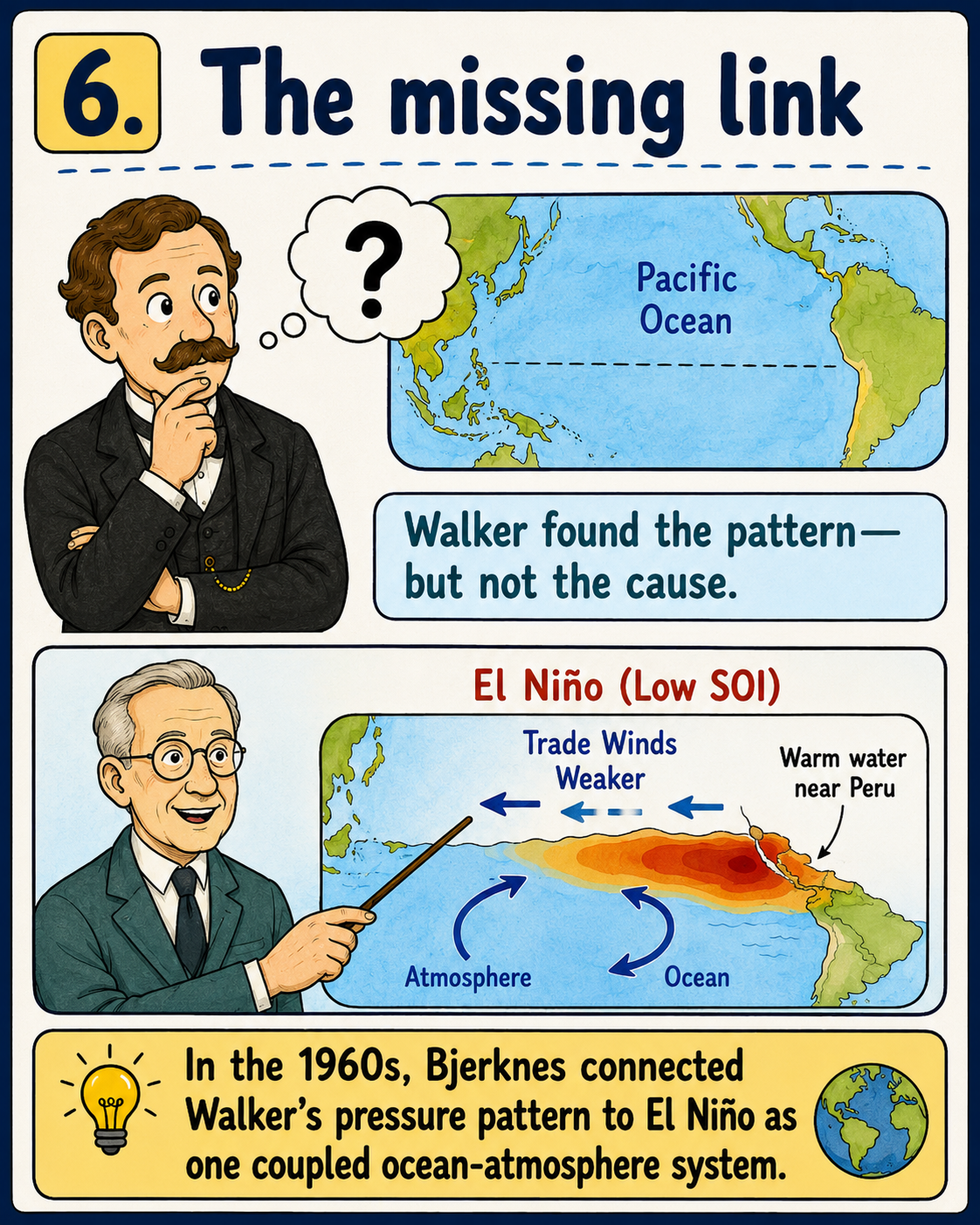
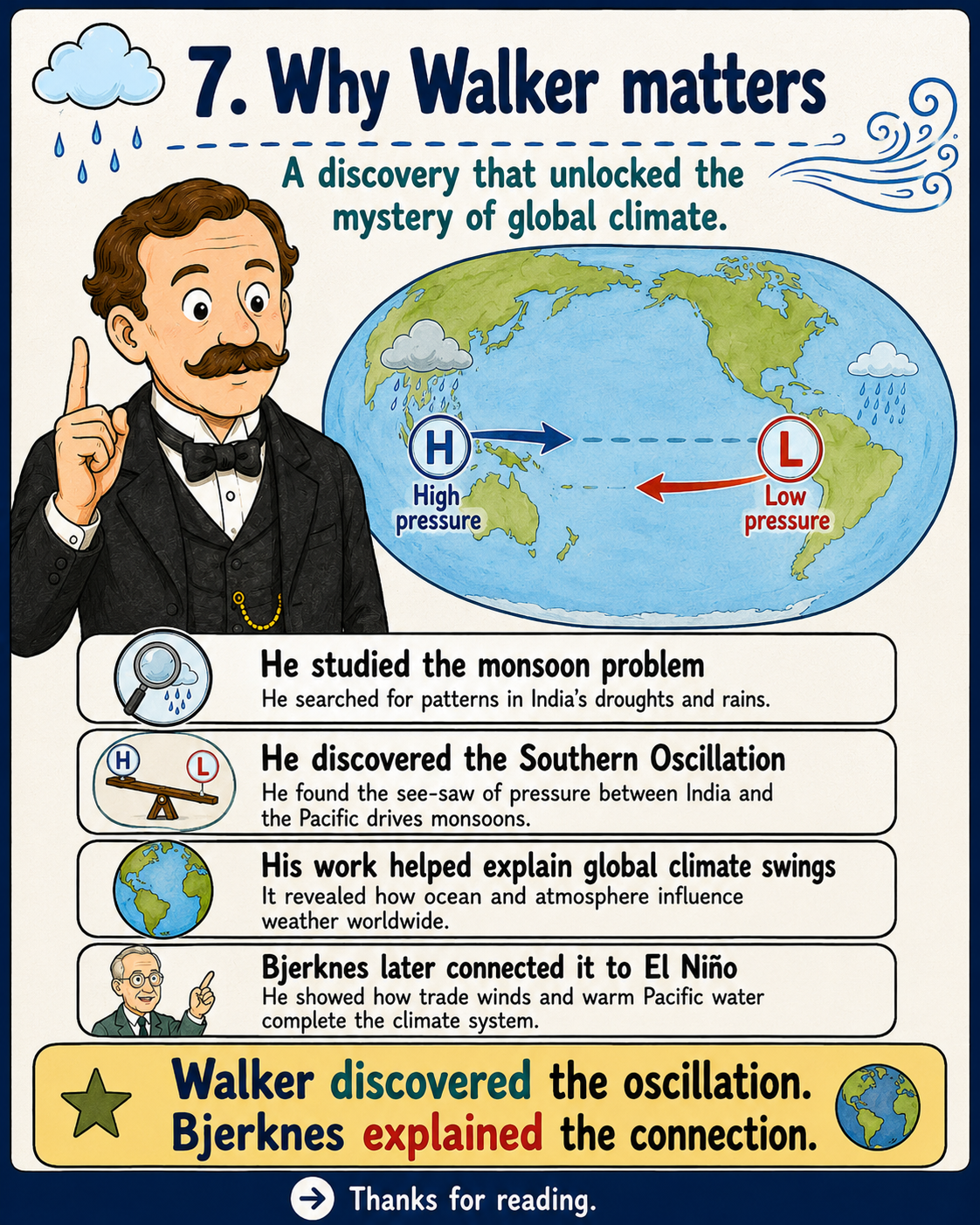
Over the next 15 years, working with vast datasets from across the globe, Walker discovered the Southern Oscillation — a planetary-scale atmospheric "seesaw" between the Indian and Pacific Oceans. Today we know this as the El Niño–Southern Oscillation, one of the most important climate phenomena on Earth. The Walker Circulation, a major atmospheric pattern, still bears his name.
Walker's methods for analysing correlations in time-series data — now known in part as the Yule-Walker equations — helped lay the foundation for modern statistical forecasting. He served as president of the Royal Meteorological Society (1926–27) and was knighted in 1924.